“Lockdown has been brutal for children,” says Tim Gill, author of a new book, Urban Playground: How Child Friendly Planning and Design Can Save Cities. “It has seen an extreme acceleration in what’s been happening to children’s lives for the last 50 years: the total erosion of their everyday freedoms. I really hope the pandemic will be a wakeup call for people to see the broader impact of this form of incarceration that children have been living with for decades.”
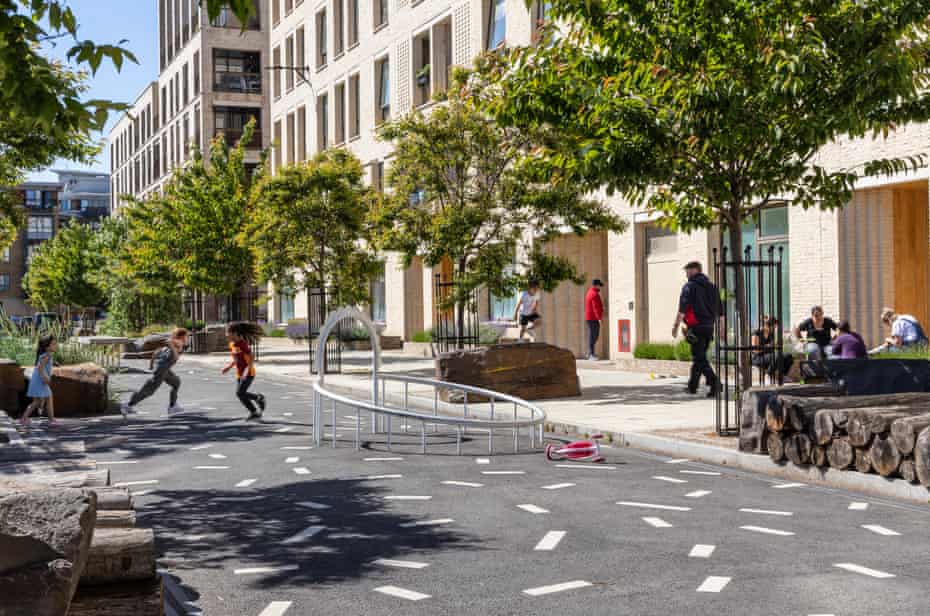
Gill’s book is brimming with examples of how we might plan a healthier post-Covid world. Unsurprisingly, many of the case studies come from Scandinavia, Germany, Belgium and the Netherlands, where the rights of children have been at the forefront for decades. One chapter is dedicated to Rotterdam, a city Gill says has arguably devoted more time, money and energy to child-friendly planning than any other. Removing parking spaces, widening pavements (specifically on the sunny side of the street), dotting play features across the public realm, opening schoolyards out of hours, and extensive greening have all led to an urban landscape that feels safe and attractive for children to roam.
 Streets to live