intersection of the future

We tend to think we’re better than some piece of software, despite the fact that 80% to 90% of crashes are due to human error

The intersection of the future has no stoplight—just a very, very intelligent algorithm.

SLOT-BASED DESIGN

Slot-based network design has already populated other industries. A great example comes from airlines,—instead of letting people line up all at once to board a plane, the airline divides people into six batches, each of which boards at an explicit time.

it’s actually among the fastest ways to board a plane. It’s a form of “slot-based” scheduling, which is already in use everywhere from air traffic control to business management. The basic idea is that actors in a system are grouped into batches, and the speed of their movement is carefully controlled to move them more efficiently through a space.

more

designing cities for people

Challenge of rebuilding our communities as walk able places after decades of designing our cities around cars, not people.

People Walking and Biking at Riverwalk

How we design for and treat seniors is extremely telling. Rather than creating a road environment that takes care of them, we create unsafe and unappealing walking conditions, then tell them to take care.

more

Changing the World by Changing Street Design

The expectation is that our streets are for cars. Car-dominated design has really wreaked havoc on cites. Changing that street code and working fast to show people what possibilities are hidden in plain site is really important.
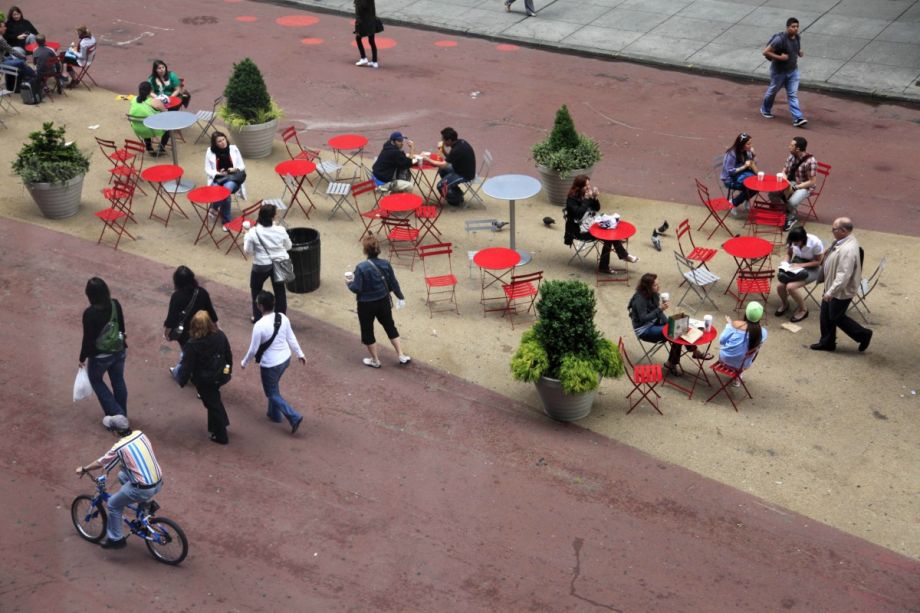
“Every inch of the 180 acres we reclaimed from cars was a fight. When you change the DNA of a city it can raise hackles. People in every city have reasons why they can’t lose a parking space, why every lane is needed, and a lot of times that they need even more lanes. Navigating that fight is a key part of the process. It requires not just a new vocabulary for street design in our cities, but literally a new vocabulary to describe these kinds of changes. And it does require political courage to try something for the first time and strategies to win buy-in from the public.” (Janette Sadik-Khan)

Janette Sadik-Khan helped change New York. As commissioner of the New York City Department of Transportation under Mayor Michael Bloomberg, Sadik-Khan and her staff implemented an unprecedented number of progressive streets projects.

The real lesson here is if you build eight lanes of roads you’re going to get eight lanes of traffic. But if you want streets that are safer, more walkable, more affordable, better for the economy and transit, you can start by building a bike lane.
more

car century was a mistake

The car century was a mistake. It’s time to move on.

Cars were never necessary in cities, and in many respects they worked against the fundamental purpose of cities: to bring many people together in a space where social, cultural and economic synergies could develop. Because cars require so much space for movement and parking, they work against this objective — they cause cities to expand in order to provide the land cars need. Removing cars from cities would help to improve the quality of urban life.

cropped-bestpractices_page16_image1.jpg

The movement of significant numbers of cars through the streets will always damage streets’ social use, regardless of how quiet and safe the cars may be. Only when people can stop in the middle of the street to talk without fearing what may be bearing down on them will we have fully restored the social function of streets.

more


Don’t blame pedestrians when cars hit them

We need a road environment that takes care of pedestrians, rather than a culture that simply tells them to take better care. That means lower urban speed limits, particularly in residential or high pedestrian areas, road design that discourages fast driving (especially when turning), improved traffic light timing, and better connections to public transport, where it exists.

20150127_081230

more

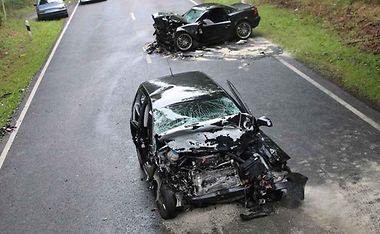
More driving means more dying

This suggests that the relationship between driving and deaths is non-linear: a one percent increase in driving produces a much larger than one percent increase in deaths—actually, something like a three percent increase in deaths, based on these very partial data.

Let's walk

We know that for many reasons, there are structural connections between cheaper gas, more miles driven, and more traffic fatalities. But some analysts want to downplay those structural issues and place the blame on driver behavior.

more